 PhrasePort
🇯🇵 Japanese phrases
How to Say Hello in Japanese: Greetings, Bowing and Goodbyes
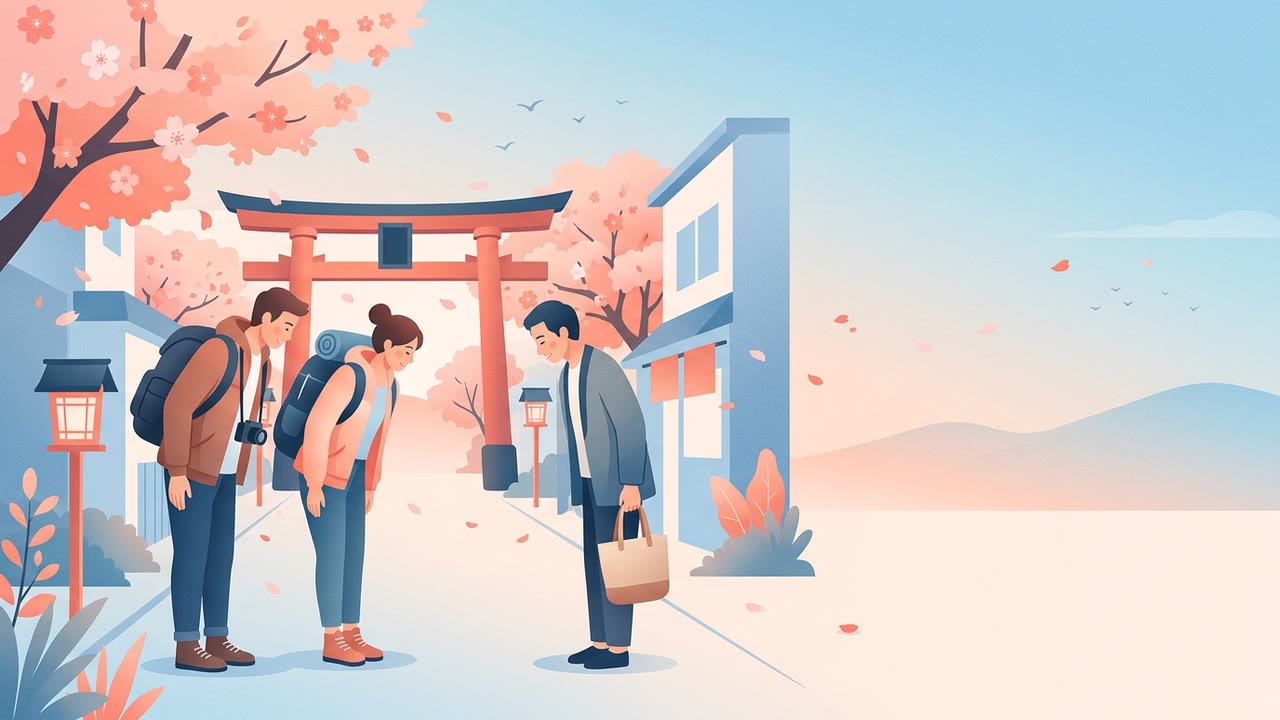
The standard way to say hello in Japanese is “Konnichiwa” (こんにちは), and it works from late morning until the early evening. Japanese has different greetings for different times of day, so the full answer is: “Ohayou gozaimasu” in the morning, “Konnichiwa” in the day, and “Konbanwa” in the evening.
- Good morningおはようございますOhayou gozaimasuUntil about late morning. Polite, so safe with everyone.
- HelloこんにちはKonnichiwaThe everyday greeting for the daytime.
- Good eveningこんばんはKonbanwaFrom the early evening onwards.
Hello by time of day
Japanese greetings follow the clock, but they are not strict. People do not check their watch. They simply say what feels right.
- Morning (until about 10 or 11 am): Ohayou gozaimasu. To friends and family you can shorten it to Ohayou.
- Daytime: Konnichiwa. Notice that the final syllable is written with the character は (ha) but is pronounced “wa”.
- Evening: Konbanwa. Same spelling note: the last syllable is pronounced “wa”.
- Going to bed: Oyasumi nasai means “good night”, but it is said when someone is going to bed, not as a hello in the evening.
Between friends, many Japanese people do not say konnichiwa much at all. A casual “Doumo” is common, and it can mean hi, thanks or a small sorry, depending on the moment.
- Good nightおやすみOyasumiCasual. Add "nasai" (おやすみなさい, Oyasumi nasai) to be polite.
- Hi / thanks / sorry (casual)どうもDoumoA flexible word for friends and shop staff. Meaning depends on the moment.
- Good morning (casual)おはようOhayouFor friends and family only.
Bowing and body language
You do not need to bow deeply as a visitor. A small nod, or a slight bow from the waist, as you say the greeting is polite and welcome. Do not worry about getting the angle exactly right.
- Handshakes are not the usual Japanese greeting, but many people will shake hands with visitors if offered.
- Hugging and kissing are not used when greeting.
- You will hear Irasshaimase (“welcome”) when you walk into a shop or restaurant. You do not need to reply.
- WelcomeいらっしゃいませIrasshaimaseWhat staff say when you walk in. A nod is enough as a reply.
Saying goodbye
Many visitors learn “Sayounara” first, but it is more final than you might expect. It is the word for a longer parting, such as the end of a school year or a long trip. In daily life, Japanese people usually say something else.
- GoodbyeさようならSayounaraCorrect, but it sounds final. Save it for longer partings.
- See you laterまたねMata neCasual. Good with friends.
- See you tomorrowまた明日Mata ashita
- Excuse me for leaving (polite)失礼しますShitsurei shimasuSaid when you leave a room, an office or a conversation. Also used to end a phone call.
- Take care気をつけてKi o tsuketeFriendly and warm.
Please, thank you and sorry
These small words will do more for you than any other phrase in the language.
- Thank youありがとうございますArigatou gozaimasuPolite. Safe in every situation.
- Thank you (casual)ありがとうArigatouFor friends and family.
- Thank you very muchどうもありがとうございますDoumo arigatou gozaimasu
- You're welcomeどういたしましてDou itashimashiteOften replaced by a smile and a nod in daily life.
- Pleaseお願いしますOnegai shimasuUsed when asking for something. "Onegai shimasu" is the polite form.
- Excuse meすみませんSumimasenGets attention, says sorry and also says thank you, all in one word.
- I'm sorryごめんなさいGomen nasaiA personal apology, stronger than "Sumimasen".
Introducing yourself
When you meet someone for the first time, you say Hajimemashite, give your name, and finish with Douzo yoroshiku onegai shimasu. The last phrase has no exact English translation. It means roughly “Please treat me kindly” and is the usual ending to an introduction.
- Nice to meet youはじめましてHajimemashiteOnly used the first time you meet someone.
- My name is...私の名前は...ですWatashi no namae wa... desuPut your name in place of the dots. Then bow slightly.
- Pleased to meet you (the usual ending)どうぞよろしくお願いしますDouzo yoroshiku onegai shimasu
- I am from (country)(国名)から来ました(Country) kara kimashitaFor example "Amerika kara kimashita" (I am from America) or "Igirisu kara kimashita" (the UK).
- How are you?お元気ですかOgenki desu kaUsed more among people who know each other than with strangers.
- I'm fine, thank you元気です、ありがとうGenki desu, arigatouThe usual answer.
Pronunciation in one minute
- Vowels: a, i, u, e, o sound like ah, ee, oo, eh, oh.
- “wa” in konnichiwa and konbanwa: written with は, pronounced “wa”.
- Long vowels: “ou” and “uu” are held a little longer, as in ohayou and arigatou.
- “Gozaimasu” sounds like “gozaimas”. The last “u” is almost silent.
- Every syllable gets about the same weight. There is no strong stress.
Common mistakes
- Using “Sayounara” for everyday goodbyes. It sounds final. Use “Mata ne” with friends or “Shitsurei shimasu” in formal moments.
- Saying “Konnichiwa” in the early morning or late at night. Use “Ohayou gozaimasu” in the morning and “Konbanwa” in the evening.
- Leaving out “gozaimasu”. “Ohayou” and “Arigatou” alone are casual. With strangers, add it.
- Hugging or kissing as a greeting. A nod or small bow is enough.
- Worrying too much. Japanese people are glad when visitors try, even with one or two words.
More for your trip
Once you can say hello, the next phrases you will need are in our Japanese phrases for travel. If you are going to eat out, read how to order food in Japanese.
Questions travelers ask
Is konnichiwa the only way to say hello in Japanese?
No. Konnichiwa is the standard daytime greeting, but the greeting changes with the time of day. In the morning you say "Ohayou gozaimasu", and in the evening "Konbanwa". Among friends, people often use casual words such as "Doumo", and shop staff say "Irasshaimase" (welcome).
How do I say good morning in Japanese politely?
Say "Ohayou gozaimasu". Adding "gozaimasu" makes it polite, and you should use it with strangers, staff and anyone older than you. "Ohayou" on its own is casual and used with friends and family.
Do I need to bow in Japan?
You do not need to bow deeply as a visitor. A small nod of the head, or a slight bow, along with the greeting, is polite and appreciated. If someone offers to shake hands, you can shake. Kissing and hugging are not used when greeting.
What do you say when answering the phone in Japan?
People say "Moshi moshi" when answering a phone call or calling someone. You would not use it face to face. In business, a company will answer with its name instead.
More guides
 🇯🇵 JapaneseHow Much Is It in Japanese? Yen, Tax and Paying at the CounterHow to ask how much something costs in Japanese, with audio, plus yen and big numbers, tax, cash and cards, and shopping customs.November 12, 2026 · 5 min read
 🇯🇵 JapaneseJapanese Emergency Phrases: 119, the Koban and EarthquakesJapanese emergency phrases with audio: how to call the police and an ambulance, report lost or stolen items, find a doctor and react to an earthquake.November 12, 2026 · 5 min read
 🇯🇵 JapaneseJapanese Hotel Phrases: Check-In, Ryokan and CheckoutJapanese hotel phrases with audio for check-in, room problems, luggage and checkout, plus what to expect in business hotels, ryokan and capsule hotels.November 12, 2026 · 3 min read