 PhrasePort
🇯🇵 Japanese phrases
Japanese Emergency Phrases: 119, the Koban and Earthquakes
In Japan, call 110 for the police and 119 for an ambulance or the fire service. Both numbers are free from any phone and work across the country. This guide gives you the phrases to use when you are connected, plus what to say for lost passports, stolen wallets, a doctor, or an earthquake.
- Help!助けて!Tasukete!Shout it if you need people around you to react.
- This is an emergencyこれは緊急事態ですKore wa kinkyuu jitai desuUseful to begin a call or to tell staff at a shop or hotel.
- Call the police警察を呼んでくださいKeisatsu o yonde kudasaiAsk any bystander or shop staff to call for you if you cannot.
- Call an ambulance救急車を呼んでくださいKyuukyuusha o yonde kudasaiKyuukyuusha means ambulance.
- I need a doctor医者が必要ですIsha ga hitsuyou desu
Calling 119: ambulance or fire
The same number covers both. The operator will ask which one you need, so listen for “Kaji desu ka, kyuukyuu desu ka?” (“Fire or ambulance?”). Then answer with one word. After that, give your location: a hotel name, a station, or a nearby landmark.
- Fire or ambulance? (what the operator asks)火事ですか、救急ですか?Kaji desu ka, kyuukyuu desu ka?
- It is an ambulance emergency救急ですKyuukyuu desuThe answer when someone needs medical help.
- It is a fire火事ですKaji desu
- Fire!火事だ!Kaji da!What you shout to warn people nearby.
- What's the emergency number here?こちらの緊急連絡先は何番ですか?Kochira no kinkyuu renraku saki wa nan ban desu ka?Useful if you are not sure which number applies.
- Can I use your phone to call for help?助けを呼ぶために、あなたの電話を使わせてもらってもいいですか?Tasuke o yobu tame ni, anata no denwa o tsukawasete moratte mo ii desu ka?To ask a stranger or a shop to let you call.
Calls to 119 are free and you should stay on the line until the operator tells you to hang up. In many big cities the operator can bring in an interpreter, but do not rely on it.
The police and the koban
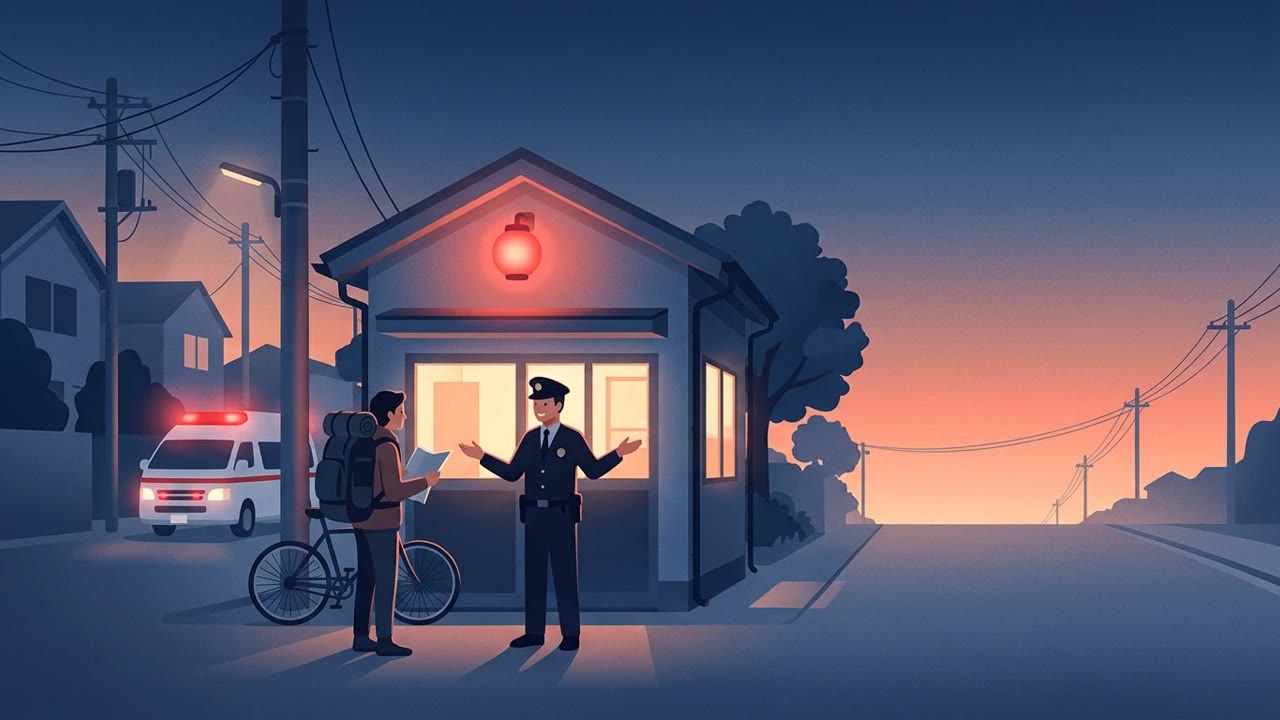
Japan has small neighbourhood police boxes called koban (交番), often next to a station. They are the easiest place to report something. Walk in, say “Sumimasen”, and use one of these phrases. Foreign visitors are expected to carry their passport, so the police may ask to see it.
- Where is the nearest police station?最寄りの警察署はどこですか?Moyori no keisatsusho wa doko desu ka?The nearest koban or police station.
- I want to file a police report警察に被害届を出したいKeisatsu ni higai todoke o dashitaiFor a theft or crime. For lost items, see below.
- My wallet was stolen財布を盗まれましたSaifu o nusumaremashita
- My phone was stolen私の携帯電話が盗まれましたWatashi no keitai denwa ga nusumaremashita
- My bag was stolenバッグを盗まれました。Baggu o nusumaremashita.
- My belongings were stolen私の持ち物が盗まれましたWatashi no mochimono ga nusumaremashita
- I want to report a theft盗難届を出したいですTounan todoke o dashitai desuA theft report is often needed for insurance.
Lost something?
Japan is known for lost items being handed in. If you drop or forget something, go to the nearest koban, or tell the station staff if it was on a train. Hotels and shops will often keep it too.
- I lost something (dropped it)落とし物をしましたOtoshimono o shimashita
- I left something behind忘れ物をしましたWasuremono o shimashita
- I am lost道に迷いましたMichi ni mayoimashitaSay it when you cannot find your way. Add "Sumimasen" first.
- My passport is lost/stolenパスポートをなくしましたPasupooto o nakushimashitaMeans "I lost my passport". If it was stolen, say "Pasupooto o nusumaremashita".
- I lost my travel documents旅行書類を紛失しましたRyokou shorui o funshitsu shimashita
- Where is lost and found for the airport?空港の遺失物取扱所はどこにありますか?Kuukou no ishitsubutsu toriatsukaisho wa doko ni arimasu ka?For an airport. For a train, ask the station staff.
A police report is the first step for a lost passport. Ask for a report, then contact your embassy or consulate. They will usually want to see it.
Medical help
For a serious emergency, call 119. For something less urgent, ask your hotel to call a clinic or hospital, or go to one directly. Many clinics ask you to pay on the day, so keep your receipts for your insurer.
- Is there a hospital nearby?近くに病院はありますかChikaku ni byouin wa arimasu kaByouin is a hospital.
- Is there an English-speaking doctor?英語を話せる医師はいますか?Eigo o hanaseru ishi wa imasu ka?Not every clinic will have one, but it is always worth asking.
- I do not feel well具合が悪いですGuai ga warui desu
- I need urgent medical evacuation緊急の医療搬送が必要ですKinkyuu no iryou hansou ga hitsuyou desu
Earthquakes and typhoons
Japan has frequent earthquakes, and most are small. If a strong one happens, the usual guidance is to drop to the floor, protect your head under something sturdy, hold on, and stay away from windows. If you are near the coast and a tsunami warning is issued, move to high ground straight away. Hotels have instructions in each room, so read them when you arrive.
Jishin means earthquake and hinan basho means evacuation site. You will see evacuation signs in many neighbourhoods.
- There's an earthquake地震が起きたJishin ga okitaSaid when it happens. Casual in tone, but clear.
- Where is the emergency exit?非常口はどこですか?Hijouguchi wa doko desu ka?
- Where is the nearest safe zone?最寄りの安全地帯はどこですか?Moyori no anzen chitai wa doko desu ka?
- Is it safe to go outside?外出しても安全ですか?Gaishutsu shite mo anzen desu ka?
- Please evacuate the building建物から避難してください。Tatemono kara hinan shite kudasai.This is what you may hear from staff. It means "Please evacuate".
A short scene: asking at a koban
- Youすみません。財布を盗まれました。Sumimasen. Saifu o nusumaremashita.Excuse me. My wallet was stolen.
- Officerいつ、どこでですか?Itsu, doko de desu ka?When and where?
- You駅の近くです。三十分前です。Eki no chikaku desu. Sanjuppun mae desu.Near the station. Thirty minutes ago.
- Officerパスポートを見せてください。Pasupooto o misete kudasai.Please show me your passport.
- You盗難届を出したいです。Tounan todoke o dashitai desu.I want to report the theft.
- Officerわかりました。こちらへどうぞ。Wakarimashita. Kochira e douzo.Understood. This way, please.
Common mistakes
- Waiting too long to call. In Japan, 110 and 119 are free and the operators are used to emergencies. Call early.
- Saying “kyuukyuusha” to the 119 operator and nothing else. Answer “Kyuukyuu desu” and then give your location.
- Not carrying your passport. Visitors are expected to have it with them. Keep a photo saved separately.
- Leaving without a police report after a theft or loss. You will need it for insurance or your embassy.
- Relying on one spoken phrase. Show your phone, a map or a written note as well.
Useful numbers
- 110 police
- 119 ambulance and fire service
- 050-3816-2787 Japan Visitor Hotline, 24 hours a day, with English, Chinese and Korean (from overseas, +81-50-3816-2787)
For the rest of the phrases you will need on a trip, see our Japanese phrases for travel.
Questions travelers ask
What number do I call in an emergency in Japan?
Call 110 for the police and 119 for an ambulance or the fire service. Both are free from any phone, including public phones. For general help in English, Chinese and Korean, the Japan Visitor Hotline (050-3816-2787 from inside Japan) runs 24 hours a day.
What is a koban?
A koban is a small neighbourhood police box, found near stations and in busy areas. You can walk in to ask for directions, report a lost item or report a theft. Officers there are used to helping visitors, even if they speak little English.
Will the police or the ambulance speak English?
Not always. Many large cities have interpreter support when you call 119, but you should not count on it. Say the key word (kyuukyuu for an ambulance, kaji for a fire), give the place if you can, and stay on the line. A written address or a map on your phone helps a great deal.
What should I do if I lose my passport in Japan?
Report it at a koban or police station and ask for a report, then contact your embassy or consulate. They will usually ask for the police report. Visitors in Japan are expected to carry their passport, so keep a photo of it saved separately.
More guides
 🇯🇵 JapaneseHow Much Is It in Japanese? Yen, Tax and Paying at the CounterHow to ask how much something costs in Japanese, with audio, plus yen and big numbers, tax, cash and cards, and shopping customs.November 12, 2026 · 5 min read
 🇯🇵 JapaneseHow to Say Hello in Japanese: Greetings, Bowing and GoodbyesHow to say hello in Japanese, with audio and pronunciation: greetings for morning, day and evening, goodbye, thank you, introductions and how to bow.November 12, 2026 · 5 min read
 🇯🇵 JapaneseJapanese Hotel Phrases: Check-In, Ryokan and CheckoutJapanese hotel phrases with audio for check-in, room problems, luggage and checkout, plus what to expect in business hotels, ryokan and capsule hotels.November 12, 2026 · 3 min read