 PhrasePort
🇮🇹 Italian phrases
Italian Phrases for Travel: 40+ Essentials, Signs and Manners
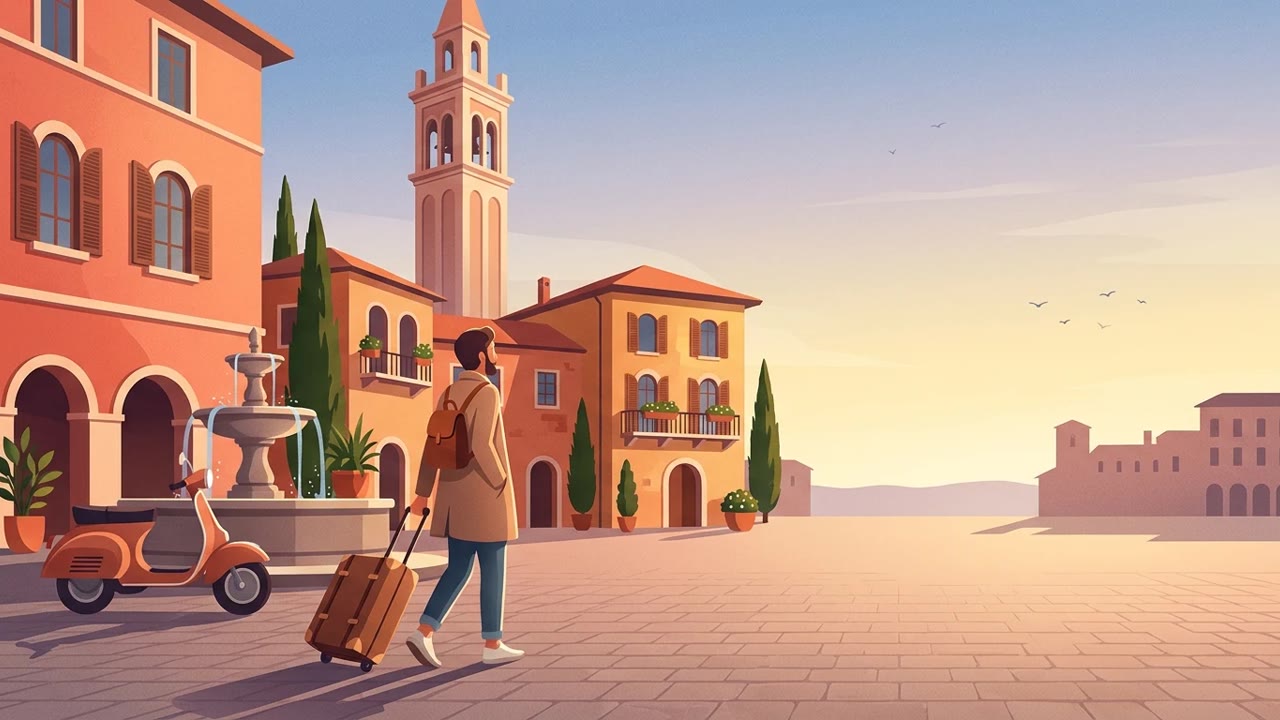
You can travel in Italy without speaking Italian, especially in big cities. But in small restaurants, local shops, markets and country towns, a few phrases make everything easier, and they are always appreciated. This guide gives you more than forty of them, with audio, grouped by what you will actually be doing.
- Good morningBuongiornobwohn-JOR-nohUse it when you walk into a shop, bar or restaurant. See our hello guide.
- Thank youGrazieGRAH-tsee-eh"Grazie mille" means thanks a lot.
- Excuse meScusiSKOO-zeeGets attention, says sorry and asks to pass.
- I'm sorryMi dispiacemih dees-pih-AH-cheh
- Do you speak English?Parla inglese?PAR-lah een-GLEH-zehAsk after you say "Scusi".
- I don't understandNon capisconohn kah-PEES-koh
- I would like...Vorrei...vor-REH-eeNever "Voglio" (I want), which sounds blunt.
- The bill, pleaseIl conto, per favoreeel KOHN-toh per fah-VOH-reh
- Where is the bathroom?Dov'è il bagno?doh-VEH eel BAH-nyohIl bagno is the everyday word for the toilet.
- How much does this cost?Quanto costa questo?KWAN-toh KOS-tah KWES-tohSay it while pointing at the item.
Each of these has its own guide: hello, ordering food, the bathroom and prices.
Greetings and politeness
Italians greet in shops, bars and lifts, so say “Buongiorno” or “Buonasera” when you walk in. A handshake is usual on first meeting, and friends kiss on both cheeks. Read the full guide on how to say hello in Italian.
- Good eveningBuonaserabwoh-nah-SEH-rah
- HelloCiaochowInformal. For friends and young people.
- Nice to meet youPiacerepee-ah-CHEH-rehPiacere. Also the reply.
- PleasePer favoreper fah-VOH-rehAdd it to every request.
- YesSìsee
When you do not understand
- Can you speak slowly, please?Può parlare lentamente, per favore?pwoh par-LAH-reh len-tah-MEN-teh per fah-VOH-rehSlows the conversation down for everyone.
- Pardon?Scusi?SKOO-zee
- I don't speak the languageNon parlo italianonohn PAHR-loh ee-tah-lee-AH-nohMeaning "I do not speak Italian".
Getting around: trains, taxis and directions
Italian trains are fast and cheap. If you buy a regional ticket without a date, validate it in the machine on the platform before you board, or you can be fined. Read our full guide to Italian train phrases.
- Where is the train station?Dov'è la stazione dei treni?doh-VEH lah stah-tsee-OH-neh day TREH-nee
- One ticket, pleaseUn biglietto, per favoreoon bee-LYET-toh per fah-VOH-reh
- Which platform does this train leave from?Da quale binario parte questo treno?dah KWAH-leh bee-NAH-ree-oh PAHR-teh kwehs-toh TREH-nohIn big stations the platform is announced late.
- Do I need to change trains?Devo cambiare treno?DEH-voh kahmb-YAH-reh TREH-noh
- Do I need to validate my ticket?Devo convalidare il mio biglietto?DEH-voh kohn-vah-lee-DAH-reh eel mee-oh bee-LYEH-tohImportant for regional tickets without a date.
- What's the next stop?Qual è la prossima fermata?KWAHL eh lah PROHS-see-mah fehr-MAH-tahFermata means a stop.
- What time is the last train?A che ora parte l'ultimo treno?ah keh OH-rah PAHR-teh LOOL-tee-moh TREH-nohCheck before you go out in the evening.
- I would like a taxiVorrei un taxivor-REH-ee oon TAHK-see
- Turn leftGiri a sinistraJEE-ree ah see-NEES-trahThe words you will hear when someone gives you directions.
- Turn rightGiri a destraJEE-ree ah DEHS-trahSinistra is left, destra is right.
- Go straightVada drittoVAH-dah DREE-tohDritto means straight ahead.
- Can you show me on the map?Può mostrarmelo sulla mappa?pwoh mohs-TRAR-meh-loh SOOL-lah MAP-pah
- I am lostMi sono perso/amee SOH-noh PEHR-sohAdd "Scusi" first.
Eating and drinking
Restaurants in Italy have their own habits: a cover charge, courses, and a bill that only comes when you ask. Read the full guide on how to order food in Italian.
- Do you have a menu in English?Avete un menu in inglese?ah-VEH-teh oon meh-NOO een een-GLEH-zeh
- I am vegetarianSono vegetariano/aSOH-noh veh-jeh-tah-ree-AH-nohUse "vegetariana" if you are a woman.
- Water, pleaseAcqua, per favoreAH-kwah per fah-VOH-reh
- A coffee, pleaseUn caffè, per favoreoon kahf-FEH pehr fah-VOH-rehAn espresso. Drink it standing at the bar for the lowest price.
Shopping and money
Prices are fixed in shops, and include tax. Cards are widely accepted, but keep some cash for markets and small places. See our guide on how much is it in Italian.
- Can I pay by card?Posso pagare con la carta?POS-soh pah-GAH-reh kon lah KAR-tah
- Where is the nearest ATM?Dov'è il bancomat più vicino?doh-VEH eel BAN-koh-maht pew vee-CHEE-nohA bancomat is a cash machine.
- Can I have the receipt, please?Mi dà lo scontrino, per favore?mee DAH loh skohn-TREE-noh pehr fah-VOH-reh
- Do you offer tax-free shopping?Fate il tax free?FAH-teh eel tahks FREEBring your passport. Not every shop takes part.
Hotels
- I have a reservationHo una prenotazioneoh OO-nah preh-noh-tah-tsee-OH-neh
- I would like to check inVorrei fare il check-invor-REH-ee FAH-reh eel check-in
- The Wi-Fi password, pleaseLa password del wifi, per favorelah password del WEE-fee per fah-VOH-reh
- Can I store my luggage after checkout?Posso depositare i miei bagagli dopo il check-out?PAWS-soh deh-poh-zee-TAH-reh ee myeh-ee bah-GAH-lyih DOH-poh eel CHEH-keh-NOW-teetVery useful if your train is later than check-out.
For more, read our guide to Italian hotel phrases.
Emergencies
In an emergency, call 112, the single European emergency number. You can also call 113 for the police and 118 for an ambulance. Read our full guide to Italian emergency phrases.
- Help!Aiuto!ah-YOO-toh
- Call the policeChiami la poliziakee-AH-mee lah poh-lee-TSEE-ah
- Call an ambulanceChiami un'ambulanzakee-AH-mee oon-am-boo-LAHN-tsah
- I need a doctorHo bisogno di un medicooh bee-ZOH-nyoh dee oon MEH-dee-koh
- Is there an English-speaking doctor?C'è un medico che parla inglese?cheh oon MEH-dee-koh keh PAHR-lah eengg-LEH-zehUseful at a hospital or clinic.
- My wallet was stolenIl mio portafoglio è stato rubatoeel mee-oh pohr-tah-FAW-lyoh eh STAH-toh roo-BAH-toh
- My passport is lost/stolenHo perso il passaporto / Mi hanno rubato il passaporto.oh PEHR-soh eel pahs-sah-POHR-toh / mee AHN-noh roo-BAH-toh eel pahs-sah-POHR-tohThe first half means "I have lost my passport", the second "My passport has been stolen". Say only the one that applies.
- I want to file a police reportVoglio sporgere denuncia alla polizia.VOH-lyoh SPAWR-jeh-reh deh-NOON-chah ahl-lah poh-leet-SEE-ahDenuncia is a formal report. Ask for a copy.
Signs worth recognizing
- ExitUscitaoo-SHEE-tah
- EntranceEntrata / Ingressoehn-TRAH-tah / een-GREHS-soh
- Open / ClosedAperto / Chiusoah-PEHR-toh / KYOO-zoh
- Push / PullSpingere / TirareSPEEN-jeh-reh / tee-RAH-reh
- No smokingVietato fumarevyeh-TAH-toh foo-MAH-reh
- PlatformBinariobee-NAH-ryoh
Manners that help you fit in
Phrases are only half of it. A few habits will help you more than perfect grammar.
- Greet when you walk in. “Buongiorno” or “Buonasera” in shops, bars and restaurants.
- Coffee. An espresso is “un caffè”. Cappuccino is a morning drink. It is cheaper standing at the bar.
- Dress in churches. Cover your shoulders and knees when you visit one.
- Restaurants. A cover charge (coperto) is normal, and tipping is not expected.
- Opening hours. Many small shops close for a break in the afternoon, often from about 1 to 4 pm.
- Validate your train ticket if it has no date.
Where to go next
Questions travelers ask
Do I need to speak Italian to travel in Italy?
No. In big cities and tourist areas many people speak English, and menus often have English. But in small towns, local restaurants and markets, a few polite phrases make a real difference, and Italians appreciate the effort.
What is the single most useful Italian phrase for a traveler?
Per favore (please) and grazie (thank you) go a long way, but the most useful is probably "Scusi" (excuse me). It gets attention, says sorry and asks for help. After that, learn "Vorrei..." (I would like...) and "Il conto, per favore" (the bill, please).
How do I call for help in Italy?
Call 112, the single European emergency number, for any service. Shout "Aiuto!" (Help!) to people nearby, and say "Chiami la polizia" (Call the police) or "Chiami un'ambulanza" (Call an ambulance).
Is it rude to speak English in Italy?
No, but starting with "Buongiorno" and a smile, and then asking "Parla inglese?" (Do you speak English?), is polite. Many Italians will answer in English if they can, and appreciate that you tried.
More guides
 🇮🇹 ItalianHow Much Is It in Italian? Euros, Tax Refunds and PayingHow to ask how much something costs in Italian, with audio, plus numbers for prices, VAT and tax-free shopping, cash and cards, and shopping customs.November 12, 2026 · 4 min read
 🇮🇹 ItalianHow to Order Food in Italian: Coperto, Courses and Coffee RulesHow to order food in Italian, with audio and pronunciation, plus coperto, courses, coffee and the bill in a trattoria, a bar and a pizzeria.November 12, 2026 · 5 min read
 🇮🇹 ItalianHow to Say Hello in Italian: Buongiorno, Ciao and Tu or LeiHow to say hello in Italian, with audio and pronunciation: ciao, buongiorno, buonasera, goodbye, thank you, introductions and the tu and Lei difference.November 12, 2026 · 4 min read