 PhrasePort
🇮🇹 Italian phrases
Where Is the Bathroom in Italian? Bagni, Bars and Signs
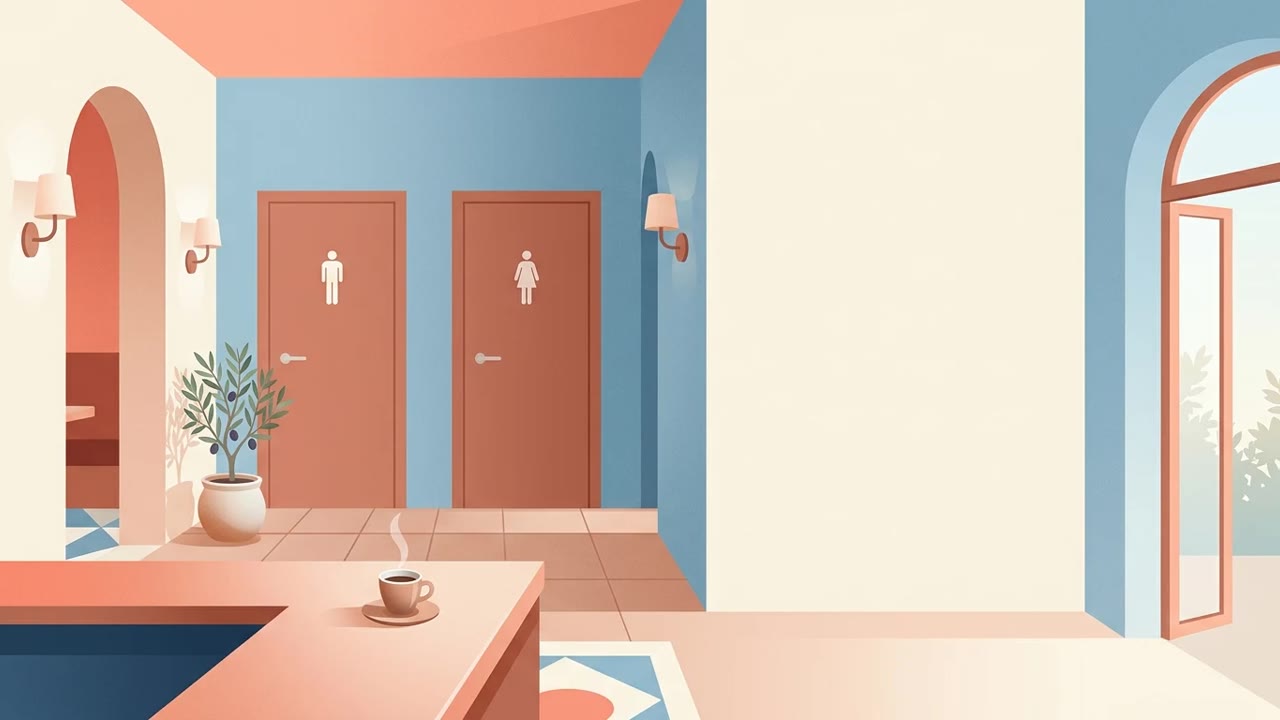
The question you need is “Dov’è il bagno?” (Where is the bathroom?). In Italian, il bagno is the everyday word and is understood everywhere. You may also hear la toilette or i servizi. Many Italian bars keep their toilets for customers, so the usual way is to order a coffee first.
- Where is the bathroom?Dov'è il bagno?doh-VEH eel BAH-nyohSay "Scusi" first to get attention politely.
- Are there restrooms nearby?Ci sono servizi igienici nelle vicinanze?chih soh-noh sehr-VEET-sih ee-JEH-nee-chih NEHL-leh vee-chee-NAHNT-sehUseful near a station, a park or a sight.
- Where is the toilet? (another common word)Dov’è la toilette?doh-VEH lah twah-LEHT
Words you will see on signs
- Toilets (sign)Bagni / Servizi / WCBAH-nyee / sehr-VEET-see / vee-chee
- MenUomini / SignoriWOH-mee-nee / seen-NYOH-ree
- WomenDonne / SignoreDOHN-neh / seen-NYOH-reh
- OccupiedOccupatoohk-koo-PAH-toh
- VacantLiberoLEE-beh-roh
- Out of orderFuori servizioFWOH-ree sehr-VEET-syoh
- Accessible toiletDisabilidee-ZAH-bee-lee
- Push / Pull (on a door)Spingere / TirareSPEEN-jeh-reh / tee-RAH-reh
Asking to use a toilet in a bar or shop
Always ask first. In a bar, buy a coffee at the counter, and then ask. In a shop or museum, ask the staff.
- May I use the bathroom, please?Posso usare il bagno, per favore?POHS-soh oo-ZAH-reh eel BAH-nyoh pehr fah-VOH-rehPolite and clear. A coffee first makes it easy.
- Is the toilet for customers only?Il bagno è solo per i clienti?eel BAH-nyoh eh SOH-loh pehr ee klee-EHN-tee
- A coffee, pleaseUn caffè, per favoreoon kahf-FEH pehr fah-VOH-rehThe usual first step: an espresso at the counter.
Where to find a toilet in Italy
- Bars and cafes. The easiest option. Buy something small, then ask.
- Train stations. Big stations have pay toilets, often around one euro, so carry coins.
- Museums and attractions. Free for ticket holders. Ask at the entrance.
- Department stores and malls. Usually free and clean.
- Motorway rest stops (autogrill). Free, and open throughout the day.
- Fast food chains. Often the simplest option in a city centre.
When something goes wrong
- The toilet is cloggedIl bagno è intasatoeel BAHNY-nyoh eh een-tah-ZAH-tohTell the staff politely. They will arrange it.
- There is no toilet paperNon c’è la carta igienicanohn cheh lah KAR-tah ee-JEH-nee-kah
- The toilet does not flushNon funziona lo sciacquonenohn foont-SYOH-nah loh shahk-KWOH-neh
Common mistakes
- Using a bar toilet without buying anything. Order a coffee first.
- Not carrying coins for pay toilets in stations.
- Confusing the signs. Signori is for men and Signore is for women. If you are not sure, look for the symbol.
- Thinking the bidet is a second toilet. It is for washing, and you can ignore it.
- Saying “gabinetto”. People will understand, but it sounds old-fashioned. Say il bagno or la toilette.
More for your trip
Eating out? See how to order food in Italian. For the full set of phrases you will need, read our Italian phrases for travel.
Questions travelers ask
Are public toilets free in Italy?
Often not. Toilets in big train stations, near major sights and in some city centres usually charge around one euro, so carry coins. Toilets in museums and attractions are free for ticket holders, and motorway rest stops (autogrill) are free.
Do I have to buy something to use a bar toilet?
In practice, yes. Many bars say the toilet is for customers only. The usual routine is to order a coffee at the counter, drink it, and then ask to use the bagno. Most owners are happy to say yes to a customer.
What do Signori and Signore mean on a door?
Signori means gentlemen (men) and Signore means ladies (women). You may also see Uomini and Donne. If there is only a picture, look for the usual symbols.
What is the extra fixture next to the toilet?
It is a bidet, a small basin for washing. It is common in Italian hotel bathrooms and homes. You can ignore it, and it is not a second toilet.
More guides
 🇮🇹 ItalianHow Much Is It in Italian? Euros, Tax Refunds and PayingHow to ask how much something costs in Italian, with audio, plus numbers for prices, VAT and tax-free shopping, cash and cards, and shopping customs.November 12, 2026 · 4 min read
 🇮🇹 ItalianHow to Order Food in Italian: Coperto, Courses and Coffee RulesHow to order food in Italian, with audio and pronunciation, plus coperto, courses, coffee and the bill in a trattoria, a bar and a pizzeria.November 12, 2026 · 5 min read
 🇮🇹 ItalianHow to Say Hello in Italian: Buongiorno, Ciao and Tu or LeiHow to say hello in Italian, with audio and pronunciation: ciao, buongiorno, buonasera, goodbye, thank you, introductions and the tu and Lei difference.November 12, 2026 · 4 min read